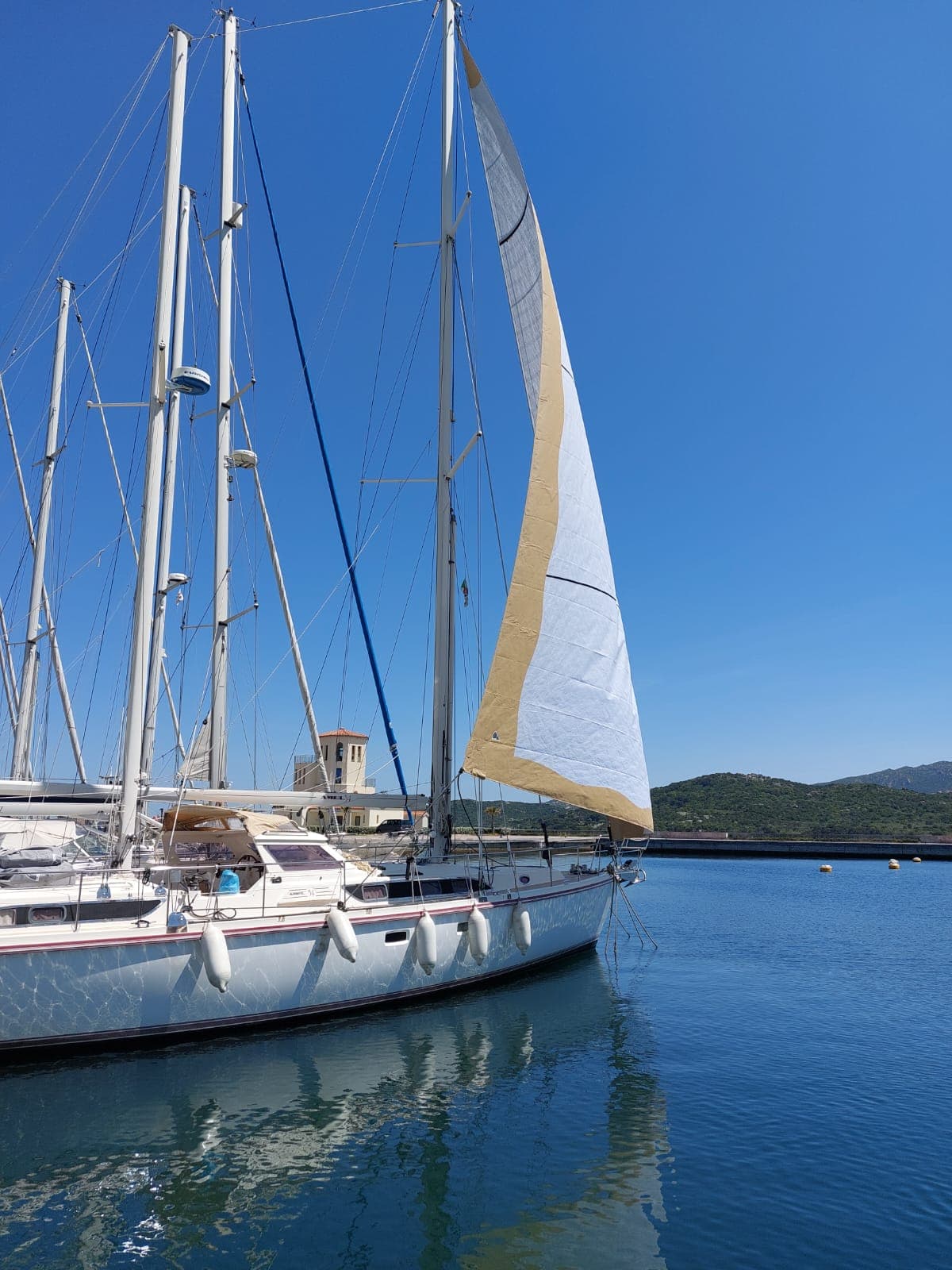
Choosing the right shade sail for a villa in Sardinia is not a trivial decision. The climate, wind, architectural context, and local regulations all affect the final result. In this comprehensive guide, we gather everything we've learned in over thirty years of work between Costa Smeralda and northern Sardinia, to help you make an informed choice.
Whether you're designing a new villa or want to add a shaded area to your existing outdoor space, here you'll find the essential information on types of structures, materials, advantages, and installation times.
In this guide
1. The five types of shade sails
Not all shade sails are equal. The choice of type depends on available space, desired aesthetic result, wind conditions, and budget. Here are the five main categories we produce.
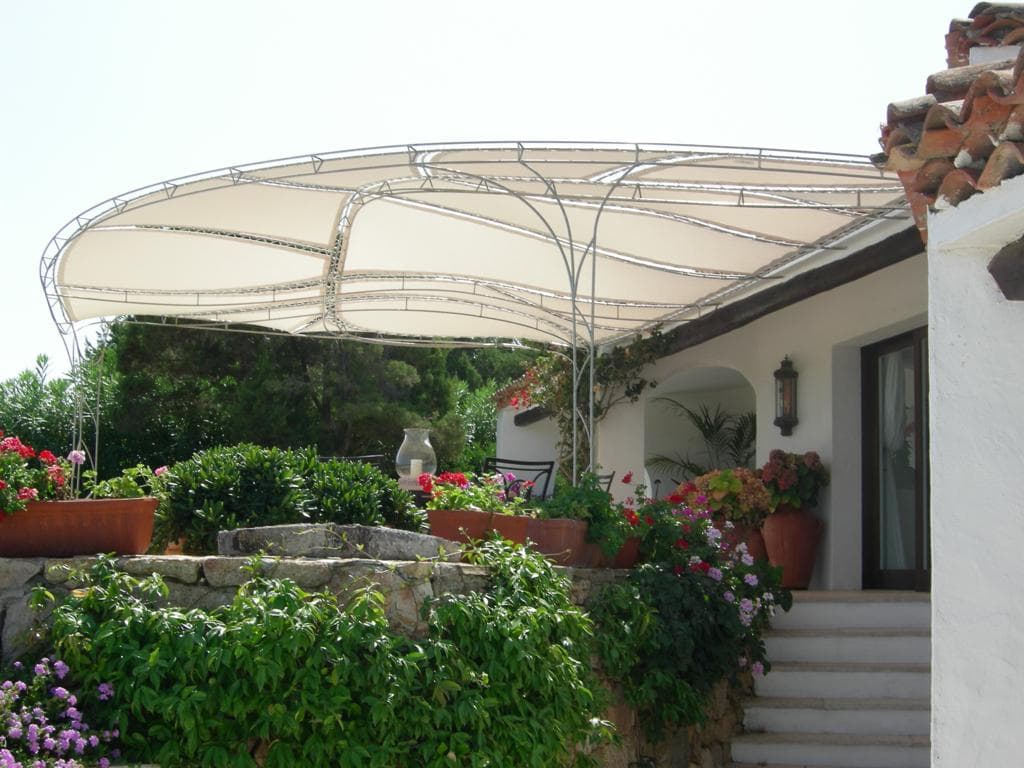
Stainless steel tensile structures
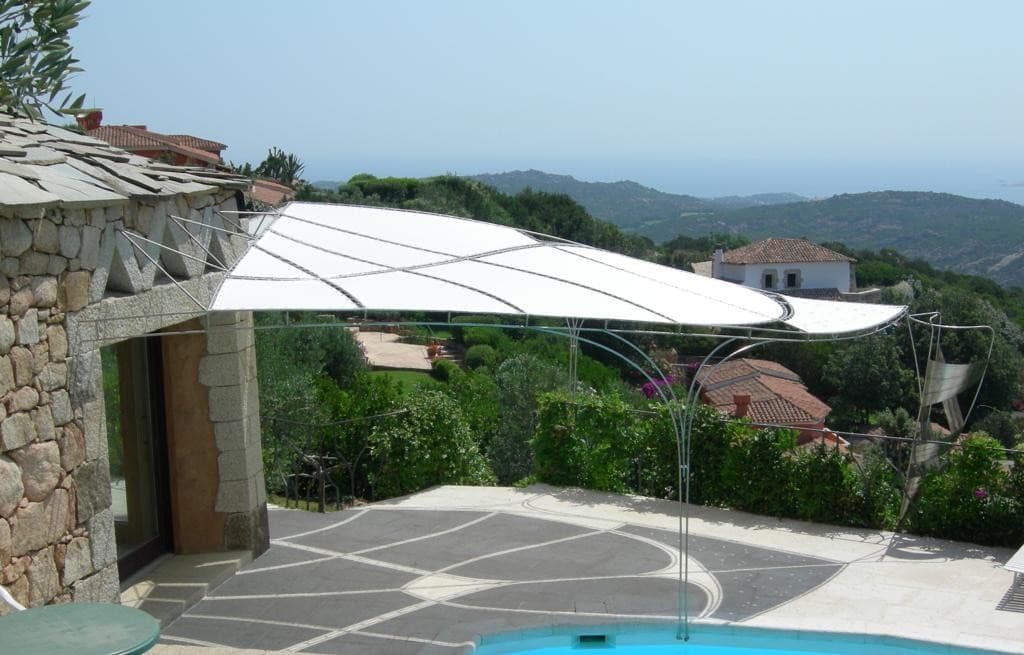
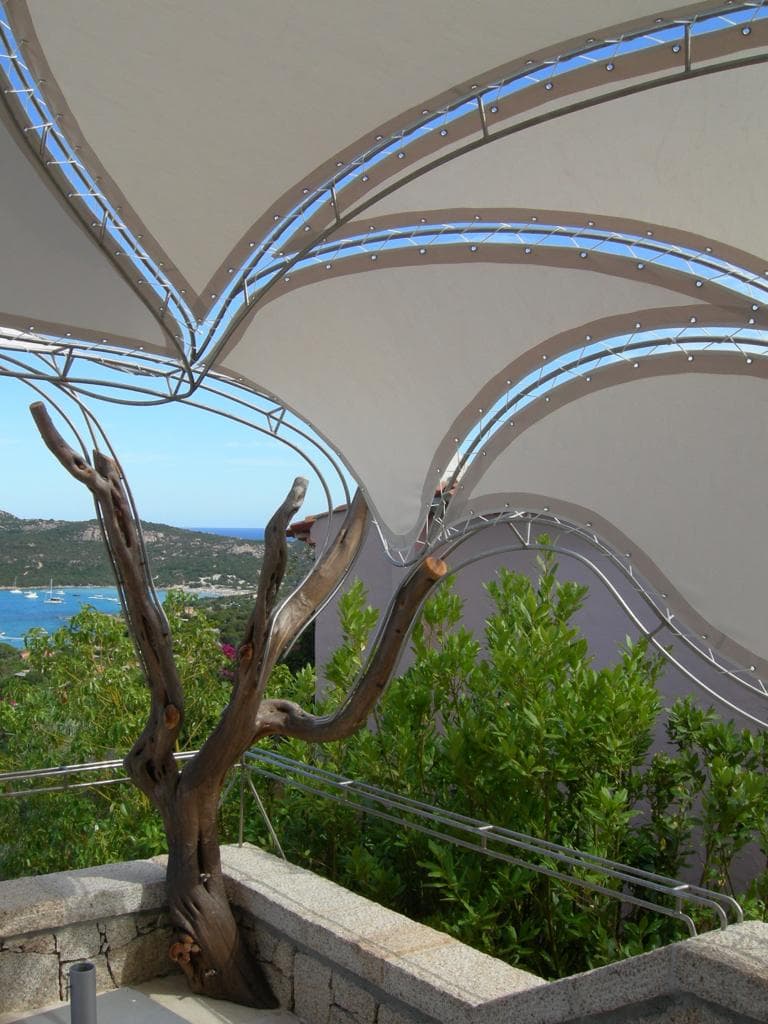
Tensile structures with a stainless steel frame represent the most professional and durable solution. The AISI 316 stainless steel supporting structure — the same used in offshore sailing — guarantees exceptional resistance to salt corrosion and the mistral wind. The membranes are tensioned using cables and turnbuckles, creating perfectly taut and aerodynamic surfaces.
This type is ideal for large terraces, pool areas, and outdoor living zones where a dramatic and permanent effect is desired. Sizes can range from a few square metres to coverings of over 100 sqm.
Triangular sails on poles
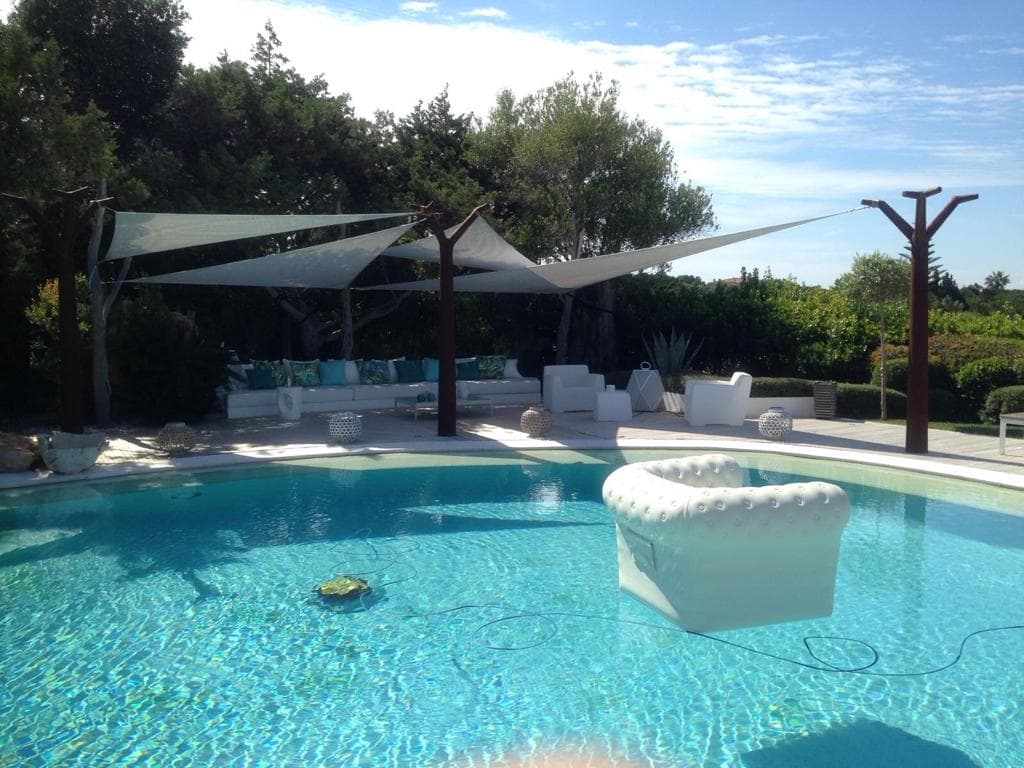
Triangular sails are the classic and most versatile solution. Mounted on steel poles or anchored to walls and existing structures, they offer great creative freedom: multiple sails can be overlapped at different heights and angles to create dynamic and dramatic shade patterns.
The main advantage is modularity: it's possible to start with a single sail and add more later, or vary colour combinations. For Costa Smeralda villas, the most requested shades are natural white, ecru, and grey tones that harmonise with granite and Mediterranean scrub.
Sliding panels
Sliding panels on steel tracks offer maximum flexibility: they can be opened and closed in seconds, adapting coverage to current conditions. They are particularly suitable for pergolas, loggias, and verandas where alternating full sun and shade throughout the day is desired.
The systems we build use stainless steel tracks and ball bearings that guarantee smooth sliding even after years of use and salt air exposure. The panels can be motorised with wall controls or remote-controlled.
Arched structures
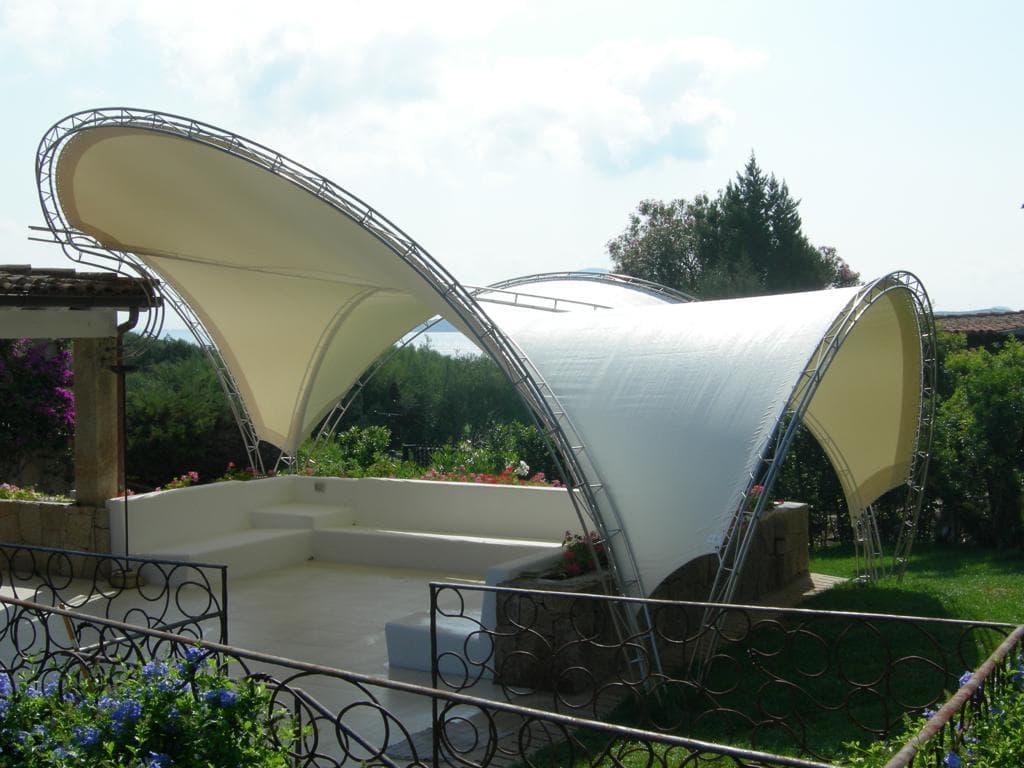
Arched structures create an architectural effect of great visual impact, with the membrane following an elegant curvature. This solution is often chosen by architects and interior designers for high-end projects, where the shade structure becomes a true design element rather than a simple accessory.
The arch shape also offers functional advantages: the curvature improves rainwater drainage and increases wind resistance compared to a flat surface. However, it requires more accurate design and adequate anchoring structures.
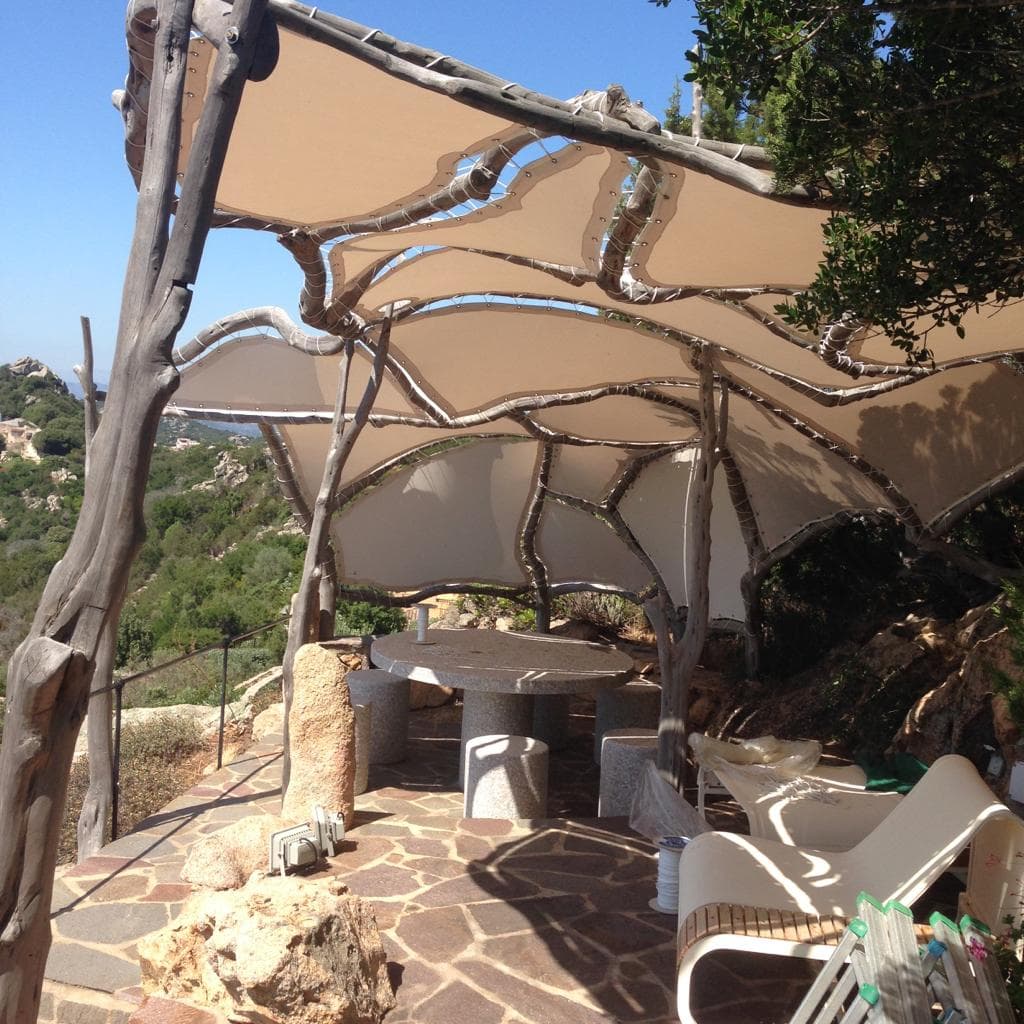
Natural wood and juniper structures
For villas that must comply with Costa Smeralda landscape regulations, natural wood structures are often the obligatory choice — and also the most fascinating. Sardinian juniper, in particular, is a material of extraordinary beauty: its trunks shaped by wind and salt air have unique and unrepeatable forms.
We handle the textile part: we design and create the sails and membranes that integrate with wood structures built by specialised carpenters. The result is a perfect combination of the expressive power of wood and the technical lightness of nautical fabric.
2. Materials: from sailing technology to architecture
The quality of a shade sail depends largely on the fabric used. We use technical membranes derived from sailing, the same found on racing and offshore cruising boats. This is not a whim: it's a precise technical choice, because these materials are designed to withstand much greater stresses than those encountered on a terrace.
Membranes with racing sail technology
The membranes we use for the most demanding structures are multilayer composite fabrics, with high-tenacity fibres that guarantee exceptional dimensional stability. This means the sail maintains its shape even after years of exposure to sun, wind, and rain, without sagging or unsightly deformation.
Soltis 86 fabrics
For many residential installations, we use Soltis 86 fabrics by Serge Ferrari, an industry standard in solar screening. It is a technical high-tenacity polyester fabric with PVC coating, offering an excellent balance of sun protection (up to 94% UV rays), breathability, and durability.
Soltis 86 is available in a wide colour range and stands out for its ability to maintain good luminosity under the sail, avoiding the 'cave' effect that occurs with fabrics that are too dark or opaque. It is mould-resistant, easy to clean, and certified for permanent outdoor use.
3. Advantages over traditional solutions
Why choose a custom shade sail instead of a masonry pergola or a prefabricated gazebo? The reasons are several, and go well beyond aesthetics.
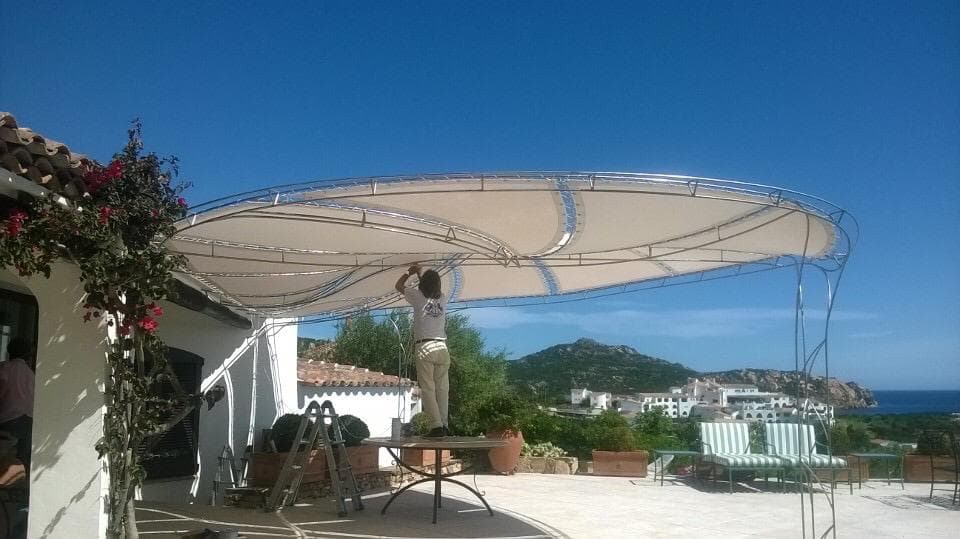
Seasonal removability
One of the most appreciated features by villa owners in Sardinia is the ability to remove the sails at the end of the season. This protects the fabrics during winter months, when wind and weather are more aggressive, and significantly extends the installation's lifespan. Seasonal storage and reinstallation are quick operations that we offer as an included service.
Wind resistance
Correctly designed structures withstand the mistral. The key lies in the sizing of anchor points, the choice of geometry, and the quality of materials. A sail designed by a sailmaker with nautical experience accounts for wind forces much more accurately than a generic garden product.
Creative freedom
Shapes, sizes, and colours are fully customisable. There are no catalogue constraints: every installation is a unique piece, designed to the exact measurements of the space and the client's needs. This allows results that integrate perfectly with existing architecture and surrounding landscape.
Visual lightness
Unlike masonry pergolas or wrought iron structures, shade sails have minimal visual impact. Their lightness dialogues with the Sardinian landscape without overwhelming it, creating shade without sacrificing the view and the feeling of open space.
4. Why a sailmaker makes the best shade sails
This is a question we're often asked, and the answer is very simple: no one knows sails better than those who build them for the sea.
A sailmaker who works with sailing boats faces the same challenges daily that arise in creating a shade sail: precise fabric cutting, sizing of load-bearing seams, calculation of traction forces, choice of raw materials based on expected stresses. At sea, a design error can mean a sail that tears during a race. On land, it means a structure that doesn't withstand the first mistral of the season.
At WSAIL Sardegna, we bring this nautical expertise to every textile architecture project. Our sail cutters are the same ones who make mainsails, genoas, and spinnakers for boats sailing in Costa Smeralda. The hardware we use — turnbuckles, shackles, steel cables — is the same as nautical equipment. This guarantees a level of reliability and durability that generic awning manufacturers simply cannot offer.
5. Seasonality and maintenance
Most installations in Sardinia follow a seasonal cycle: sails are mounted between April and May and removed between October and November. This cycle protects fabrics and structures from winter weather and allows any maintenance work during the break.
Routine maintenance is minimal: a wash with fresh water at the beginning and end of the season is sufficient to keep fabrics in perfect condition. For stainless steel structures, an annual visual check of fixing points and turnbuckles is all that's needed.
We offer a complete seasonal mounting and dismounting service, winter storage, and scheduled maintenance. Many of our clients have relied on us for years, with the peace of mind of finding everything ready at the start of each new season.
Planning a cover for your villa?
Contact us for a free, no-obligation site survey. We'll assess the space, needs, and budget together to find the best solution.